
Lead AI Responsibly in 4 Steps

Updated: Oct 31, 2025
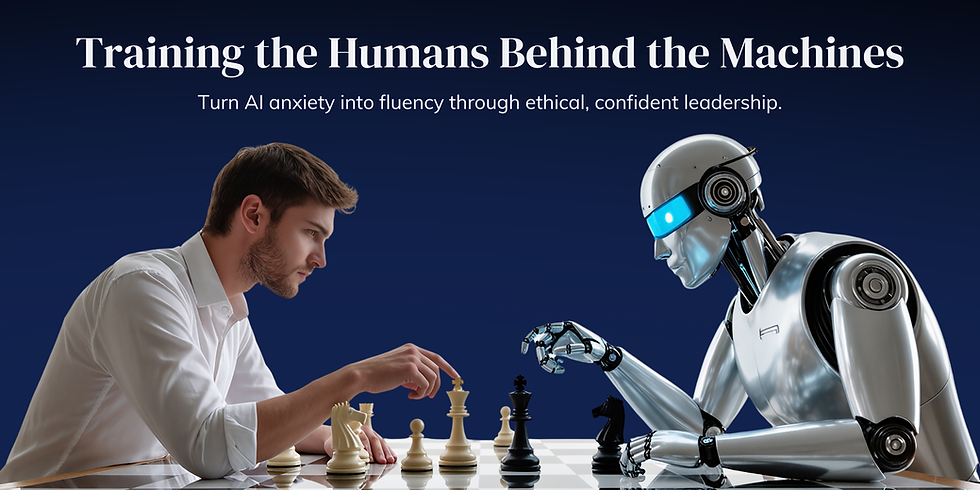
The rise of “AI Workslop” — low-quality, unvetted AI output — isn’t a technology problem. It’s a training problem. This post gives leaders a clear, actionable framework for AI governance that moves beyond compliance checklists to build real literacy, accountability, and creative confidence across teams.
Here’s how confident leaders transform AI anxiety into fluency, creating teams that innovate responsibly, not recklessly.
The AI Problem No One Wants to Admit
Every company says it’s “embracing AI.” But few can explain how they’re doing it responsibly.
The result? Teams experiment without structure, feeding sensitive data into public tools, automating complex tasks without review, and producing AI-generated content that damages brand credibility.
This isn’t innovation. It’s improvisation. And as AI becomes embedded in daily workflows, the gap between enthusiasm and governance grows dangerously wide.
The biggest risk right now isn’t the technology, it’s the untrained human use of it.
According to Gartner, over 60% of organizations use AI tools without formal training, and nearly half lack any internal policy or audit process. The outcome isn’t just bad output, it’s real exposure: legal, ethical, and reputational.
A written policy alone won’t protect you. A trained workforce will.
The Real Issue: AI Policies Are Written Like Fire Extinguishers
Most AI policies are written by legal teams for risk reduction, not real-world use. They sit in handbooks, waiting to be referenced after something goes wrong.
But AI ethics doesn’t work retroactively. It’s not about responding to mistakes, it’s about preventing them.
That means retraining how people think, not just what they click.
The best organizations are shifting from “compliance documents” to competence cultures where understanding, curiosity, and oversight replace fear and restriction.
AI governance should feel less like a rulebook and more like a set of leadership habits.
Your 4-Point Checklist for Ethical AI Training
The companies that win in the AI era aren’t the ones who use it fastest; they’re the ones who use it wisely. Here’s how top-performing leaders are training their teams for long-term ethical fluency.
1. Begin with “Why, Not Don’t”
AI training often starts with fear. Don’t upload data. Don’t copy content. Don’t use unapproved tools.
That tone teaches hesitation, not mastery.
Start with why responsible AI use matters and tie it to real outcomes.
Amazon’s AI recruitment model famously favored male applicants because it learned bias from historical hiring data.
The New York Times sued OpenAI over copyright violations tied to content scraping.
These aren’t abstract risks; they’re reminders that ethical AI is business protection.
Leadership Tip: Lead with examples, not warnings. People learn faster from stories than from policy bullet points.
2. Define “Good AI Work” in Your Context
AI doesn’t lower standards; it raises the bar for clarity.
Poor prompts lead to generic, inaccurate, or biased content. Effective prompts reflect strategy, not shortcuts.
Poor Prompt | Strong Prompt |
Write a blog post about our new product. | Write a 500-word post in our brand tone, citing two data sources, summarizing customer benefits, and formatted for LinkedIn. |
At IBM, AI literacy programs include “Prompt Labs,” where employees critique and refine AI outputs in real time.
Why It Works: Teams learn discernment, not dependence. They stop treating AI as an answer engine and start using it as a creative collaborator.
3. Make AI Use Transparent, Not Secretive
AI becomes risky when it goes underground. Employees often use it privately because they don’t know what’s allowed.
Fix that by normalizing transparency:
Add an “AI Disclosure” field in deliverables to note where AI tools assisted.
Create a shared prompt library so employees learn from one another’s best examples.
Require human review before any AI-assisted output goes public.
Real-World Example:
At PwC, every client deliverable that includes AI must document how and where it was used, plus who validated the final product.
Why It Works: Transparency doesn’t slow innovation; it legitimizes it. It shows the company takes accuracy and ethics seriously while empowering teams to keep experimenting safely.
4. Train for Bias, Oversight, and Escalation
AI isn’t neutral; it reflects the biases of its training data and users.
Every employee using AI should know how to:
Spot bias in outputs, gendered assumptions, cultural skew, or missing representation.
Intervene early when the AI’s “efficiency” crosses ethical lines.
Escalate confidently through clear internal channels designed for accountability, not punishment.
Case in Point:
At Accenture, employees go through “AI Ethics Bootcamps” that simulate real dilemmas, from detecting deepfakes to evaluating tone in marketing copy.
Why It Works: It turns theory into reflex. When people practice responsible AI, they stop fearing it and start mastering it.
Turning AI Ethics Into Everyday Behavior
Training Focus | Example Application | Why It Works |
Context Over Compliance | Teach with real cases (Amazon hiring AI, NYT lawsuit). | Translates risk into relatable lessons. |
Interactive Learning | Compare AI vs. human results during live sessions. | Builds practical literacy, not passive awareness. |
Open Documentation | Require AI-use disclosures in deliverables. | Encourages honesty, not hidden experimentation. |
Bias & Escalation | Establish channels for reporting or correcting AI misuse. | Creates cultural accountability, not fear. |
Pro Tip: Pair this table with your HR onboarding. Every new hire should leave their first week knowing exactly how your company uses, reviews, and governs AI, no guesswork required.
What Other Companies Are Doing (Not Just Writing Policies)
Forward-thinking companies are moving from “AI compliance” to “AI competence.”
1. Structured AI Literacy Programs (Microsoft)
Microsoft’s Responsible AI Champs program trains internal ambassadors who lead workshops on safe, effective AI use.
Why It Works: Peer education turns governance into culture.
2. Generative Governance Boards (Salesforce)
Salesforce created an ethics council that reviews AI initiatives quarterly for privacy, bias, and brand alignment.
Why It Works: Keeps oversight close to innovation, not buried in bureaucracy.
3. Simulation Training (Deloitte)
Deloitte conducts quarterly “AI Response Drills” mock incidents that test how teams handle data misuse or generative errors.
Why It Works: Rehearsal builds instinct; teams react faster and smarter when real issues arise.
4. Prompt Libraries (HubSpot)
HubSpot built a centralized Prompt Vault for marketing, sales, and customer success teams.
Why It Works: Quality stays consistent, and employees stop reinventing the wheel with every project.
5. Ethics Review Metrics (Adobe)
Adobe integrates ethical review data into performance dashboards, tracking compliance alongside output quality.
Why It Works: Makes responsibility measurable, not optional.
The Leadership Imperative: Teach Confidence, Not Caution
The companies that thrive in the AI age will be the ones that trust their people to use it wisely and equip them to do so.
Ethical AI use isn’t about control; it’s about credibility. The goal isn’t to limit creativity, it’s to give it structure.
When employees understand both the power and the boundaries of the tools they use, innovation accelerates safely.
A strong AI training program doesn’t just prevent errors; it sends a message: “We don’t fear new tools. We understand them better than anyone else.”
Policies define the rules. Training defines the culture. If AI is rewriting how work gets done, leaders must rewrite how responsibility is taught.
The organizations that make AI literacy a leadership competency, not an IT project, will own the next decade of innovation.
Because in the end, the edge doesn’t belong to those who use AI. It belongs to those who use it well.
Visit us at savvyhrpartner.com and follow us on social media @savvyhrpartner for expert tips, resources, and solutions to support your business and your people. Let’s bring savvy thinking to your people strategy!



Comments